Once again (hopefully for the last time) I’m writing a thread about the “Navalny Card,” about Ashurkov’s “affidavit,” and how bankers use Vladislav Solodkiy’s story.
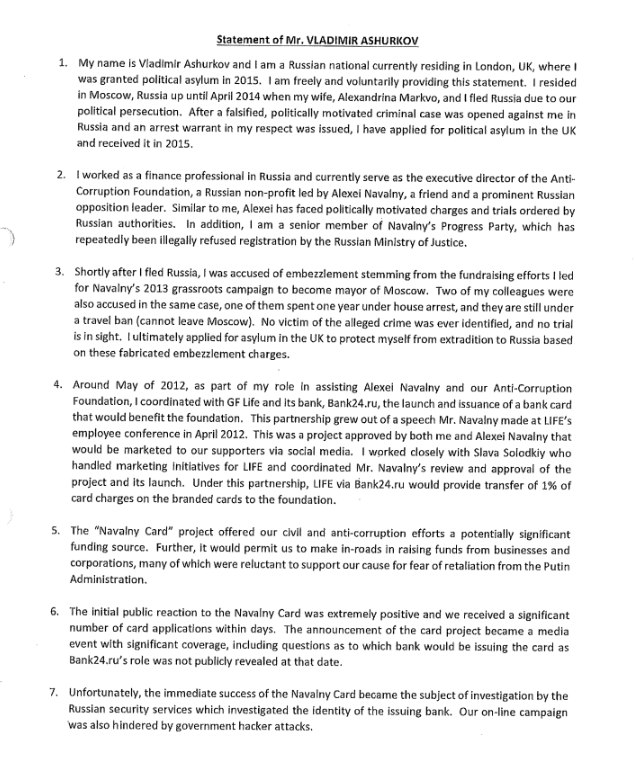
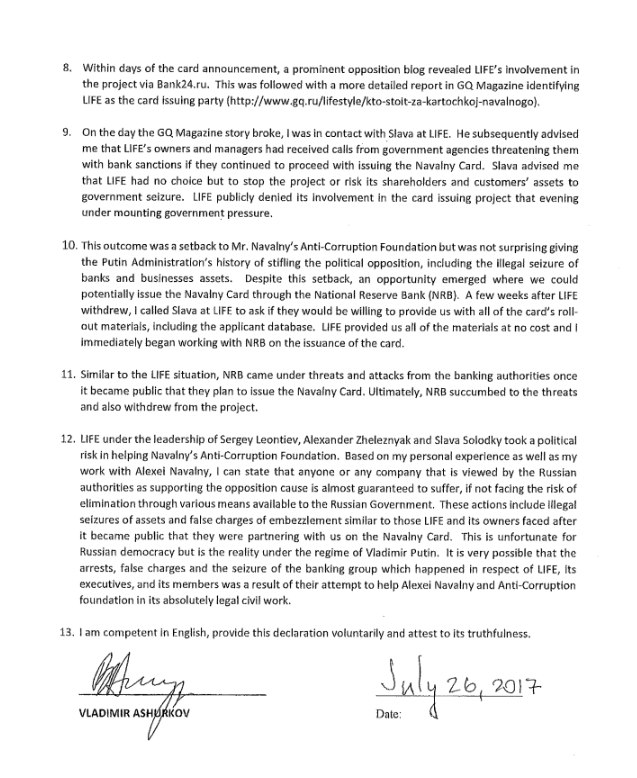
The first three points of the document are a setup to make the reader ascribe weight to the author of the written testimony — Ashurkov. And then the inconsistencies begin…
I should note right away that there was not a single word about Solodkiy in Katz’s investigation for one simple reason: of all those in leadership roles, he was the only real — albeit passive — supporter of Navalny.
I went through all of Solodkiy’s Instagram and Facebook. I found exactly six opposition posts. Mostly from Navalny’s 2013 mayoral campaign, plus one in 2012. There was also one post about the “Navalny card” from June 30, 2012, in the print edition of Forbes.
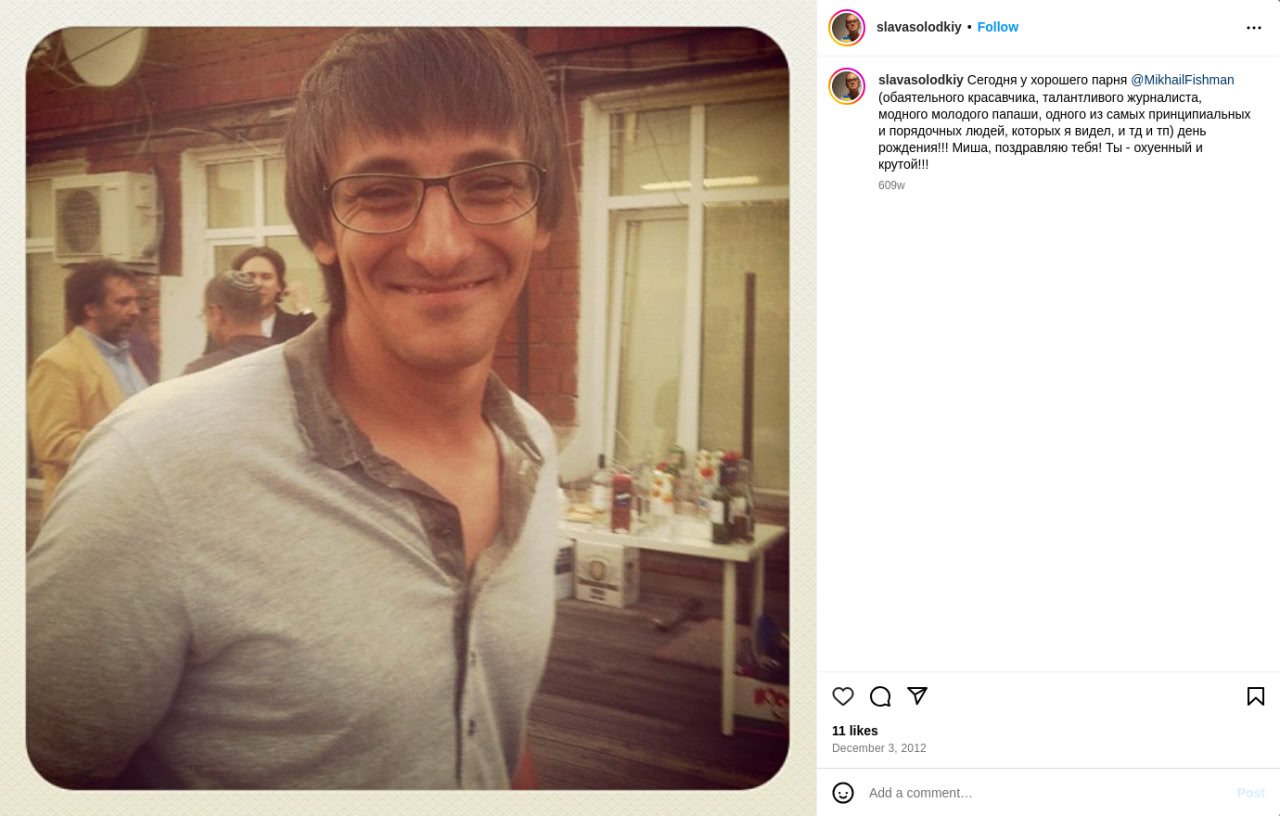
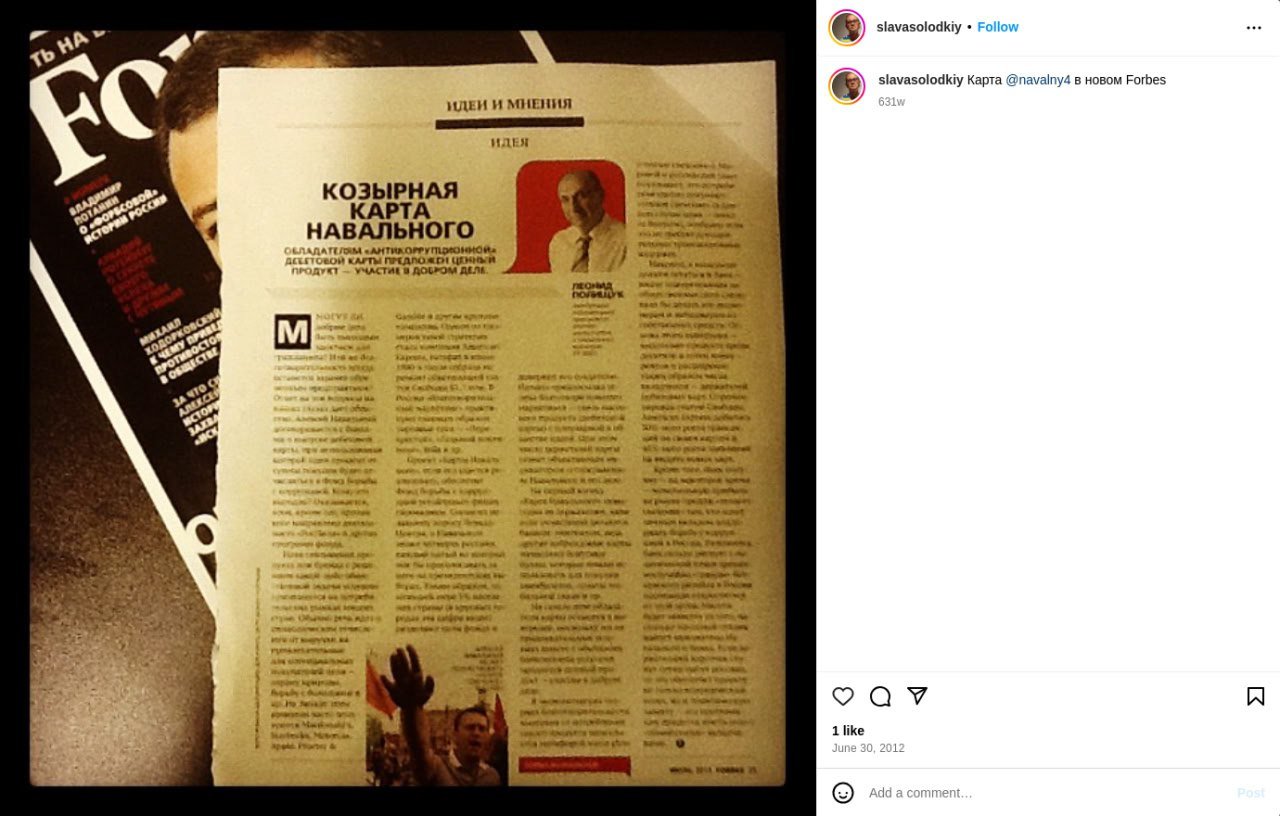
I found no signs of active contacts with Zheleznyak and Leontyev, aside from corporate gatherings and birthdays within the Probusinessbank circle, or business meetings that Oleg Tinkov would later call “fraud.” As head of the Life.Sreda venture fund, he traveled the world and exchanged experience with various banks.
Ashurkov really did participate in the financial side and may even have had contacts with some other banks. However, according to Vyacheslav Solodkiy, the idea of the card did not come from the management, but from him personally.
Courtney Weaver FT
Slava Solodkiy was Probusinessbank’s marketing guru at the time, and he also happened to be a big Navalny fan. And he took part in the protests.
Slava Solodkiy
Then I just wrote to . . . so I remember it was some quite stupid email like [email protected] or something like that. He answered, “OK. Cool that I’m interesting for such guys like you. Let’s meet.”
Courtney Weaver
So Navalny comes in and he gives this talk talking about corruption in Russian business and why it’s bad for the country’s economy. It’s not as political as some of his later speeches, but he gets a good reception. And later, Navalny and the bank, they start to think about how they can work together.
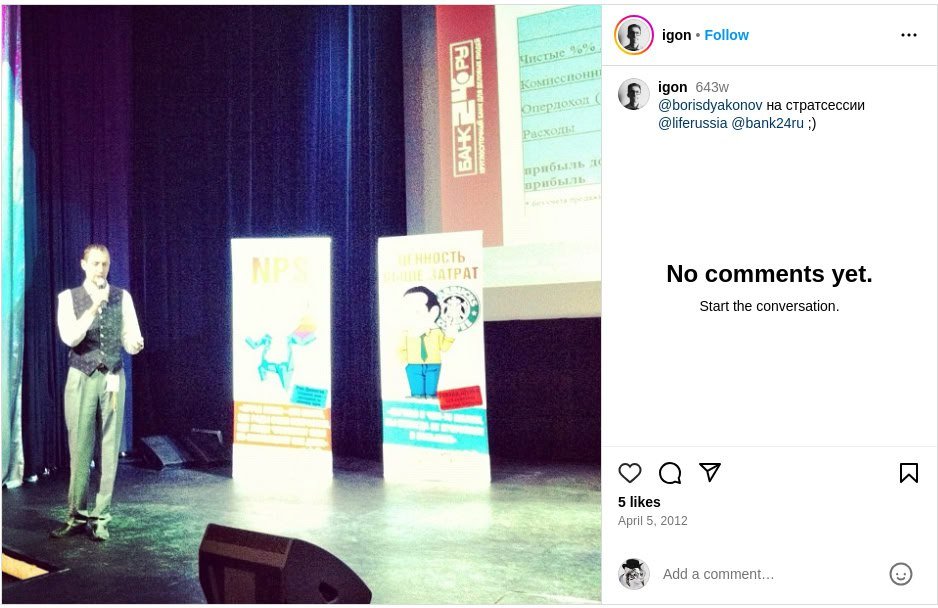
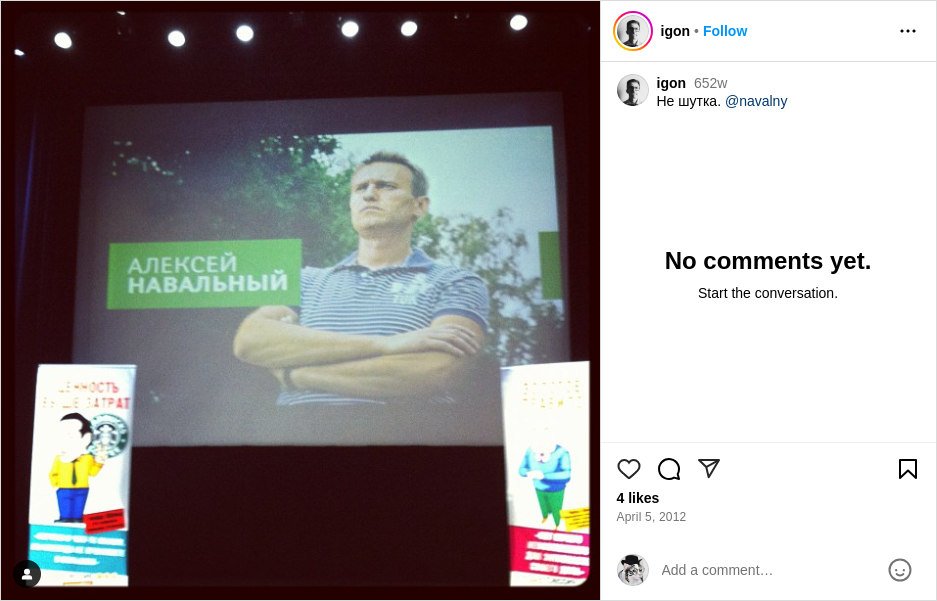
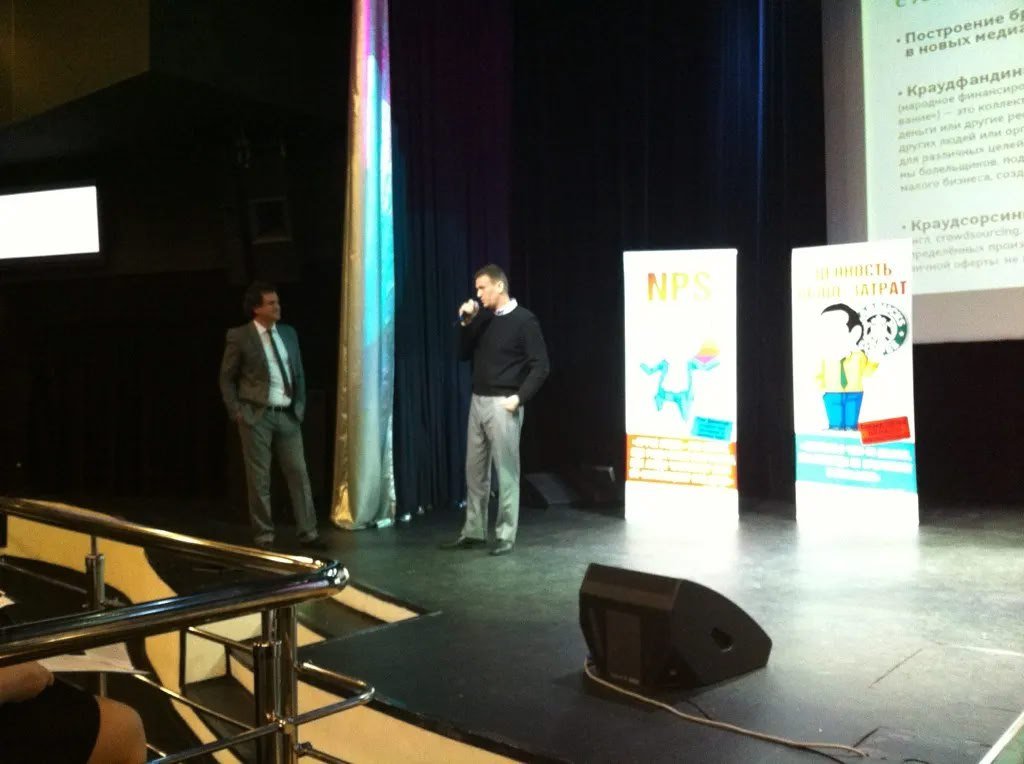
Navalny speaks at a regular strategy session of Bank24 at the Borodino Plaza business center.
Slava Solodkiy FT
I created the idea of why not to launch Navalny card.
Courtney Weaver
Slava has this idea. He’s thinking about how a lot of cards give cash back. And what if the money actually went to Navalny’s anti-corruption fund? So people feel like they’re doing something good with their money.
Slava Solodkiy
You can use this 1 per cent from each purchase to donate to Navalny campaign.
Courtney Weaver
They have some marketing material drawn up. Stuff that highlights Navalny’s activism in the anti-government protests, basically showing that there’s this appetite for change in Russia.
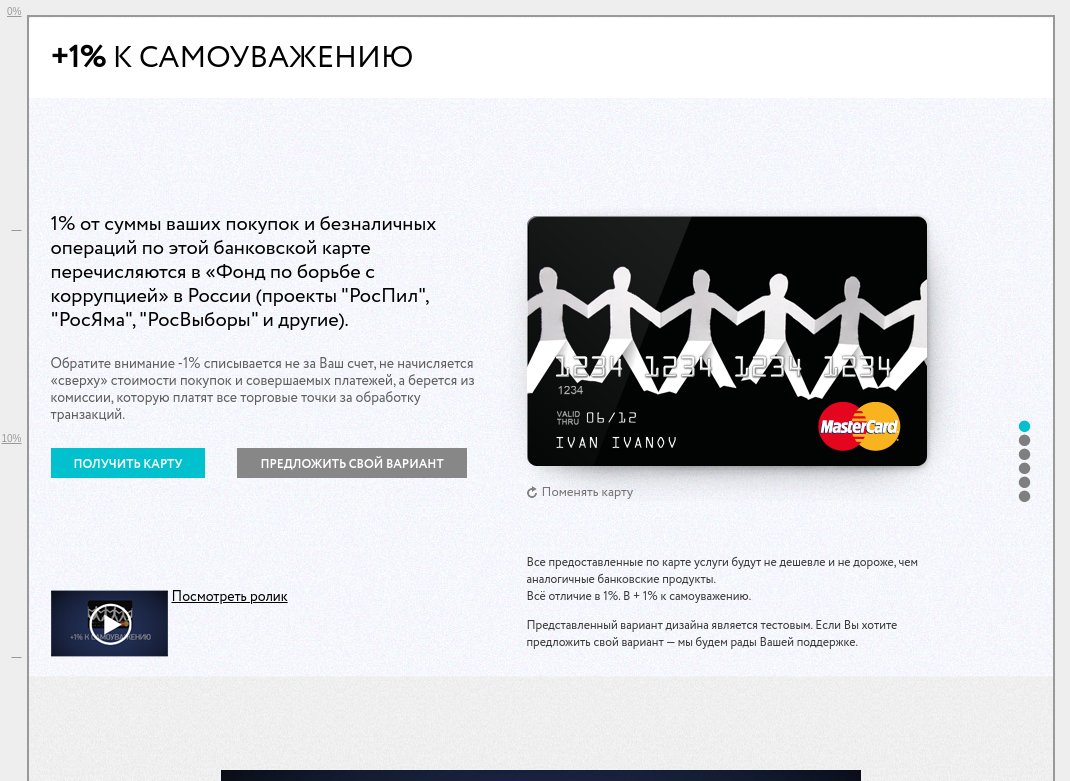
In his written testimony, Ashurkov writes that he coordinated the creation and issuance of the bank card. That the partnership resulted from Navalny’s speech at the LIFE employees’ conference in April 2012. He further writes that the project was approved by him and Alexei Navalny.
Ashurkov’s affidavit
I worked closely with Slava Solodky who handled marketing initiatives for LIFE and coordinated Mr. Navalny’s review and approval of the project and its launch. Under this partnership, LIFE via Bank24.ru would provide transfer of 1% of card charges on the branded cards to the foundation.
The “Navalny Card” project offered our civil and anti-corruption efforts a potentially significant funding source. Further, it would permit us to make in-roads in raising funds from businesses and corporations, many of which were reluctant to support our cause for fear of retaliation from the Putin Administration.
Now we record the discrepancies.
Ashurkov’s written testimony
The initial public reaction to the Navalny Card was extremely positive and we received a significant number of card applications within days. The announcement of the card project became a media event with significant coverage, including questions as to which bank would be issuing the card as Bank24.ru’s role was not publicly revealed at that date.
Unfortunately, the immediate success of the Navalny Card became the subject of investigation by the Russian security services which investigated the identity of the issuing bank. Our on-line campaign was also hindered by government hacker attacks.
Ashurkov’s Facebook post
The project received a great public response. During the preparation of this project, Alexei Navalny and I got acquainted with the main owner of the group, Sergei Leontyev, and several managers. A few days before the project presentation, when the group’s participation was about to become public, one of the bank’s managers contacted me and said that representatives of the security services, having learned about the bank’s participation in the project, pressured its shareholders and forced them to withdraw.
Ashurkov’s interview to Dozhd
In a conversation with the TV channel Dozhd, Vladimir Ashurkov, head of Navalny’s fund, said the fund and the bank came up with the idea jointly.
Courtney Weaver FT
Navalny starts to tease this card on social media, but he doesn’t reveal the bank’s name.
Slava Solodkiy
We thought that it’s risky, but it’s possible because there are many protests for sure. Police came and, like, people disappeared, but there were not many arrests at the time. They were not so hard times to raise your voice against Putin or against anyone else. Like, it’s risky, but it’s affordable risk.
Courtney Weaver
Then the whole venture, it starts to attract this bad publicity. It comes out that it’s Sergei’s bank behind the card. And the reaction from the Russian authorities isn’t great. Sergei’s business partner, he says he starts getting calls from people, people with connections to the government. And the message is pretty simple: kill the project. Pretty soon after that, Sergei and his business partner decide to pull the plug.
In Solodkiy’s deleted Linkedin article and in a still-available Medium article, the phrase “very soon” links to an article dated October 7, 2012.
The article reads:
“The bank decided to drop the project,” said Vladimir Ashurkov, head of Navalny’s Anti-Corruption Foundation, without specifying the bank’s name. “As far as I understand, they got scared of the political risks.”
“The co-branded card, which was supposed to become the latest accessory of anti-Putin protesters, was scheduled to launch earlier this year, but was postponed indefinitely.”
“We have been in talks with several other banks, but at this point there are no concrete plans,” Ashurkov said Friday.
“The idea was not originally Navalny’s, but was proposed by the bank that has now dropped the project,” Ashurkov added. The Anti-Corruption Foundation declined to comment on the identity of the institution that proposed the scheme, saying only that it is one of the country’s 100 largest banks.
“But billionaire Aleksandr Lebedev said in a July interview with Izvestia that his National Reserve Bank, ranked 98th in the country by assets according to Allbanks, was in talks to issue the card.”
“Pressure on Lebedev, who also holds stakes in agriculture, construction and the media industry, appears to be mounting, and last month he said he was going to scale back his business in Russia.”
“Nevertheless, the National Reserve Bank is still keen to issue the ‘Navalny card,’ Lebedev’s spokesman Artem Artemov said Friday.”
“He said the bank has many projects, and this is one of them. It’s in development.”
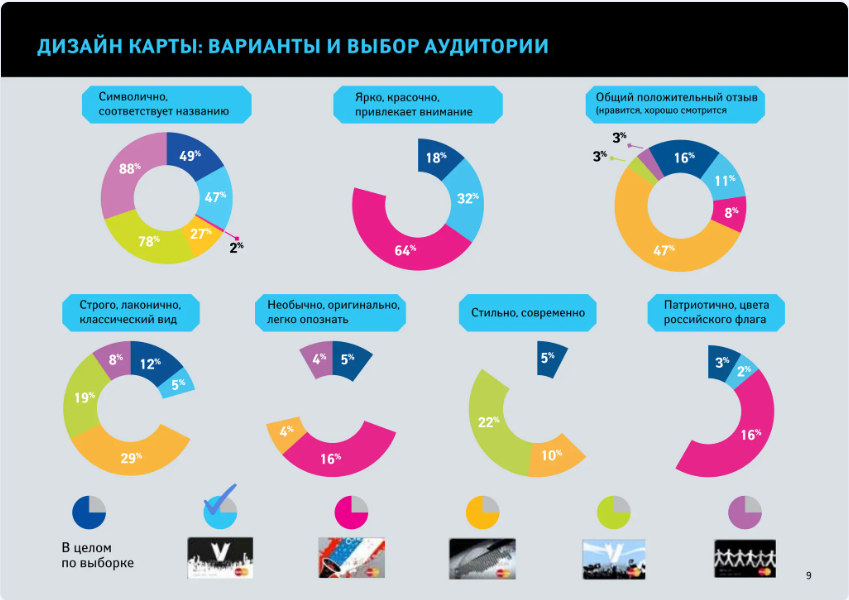
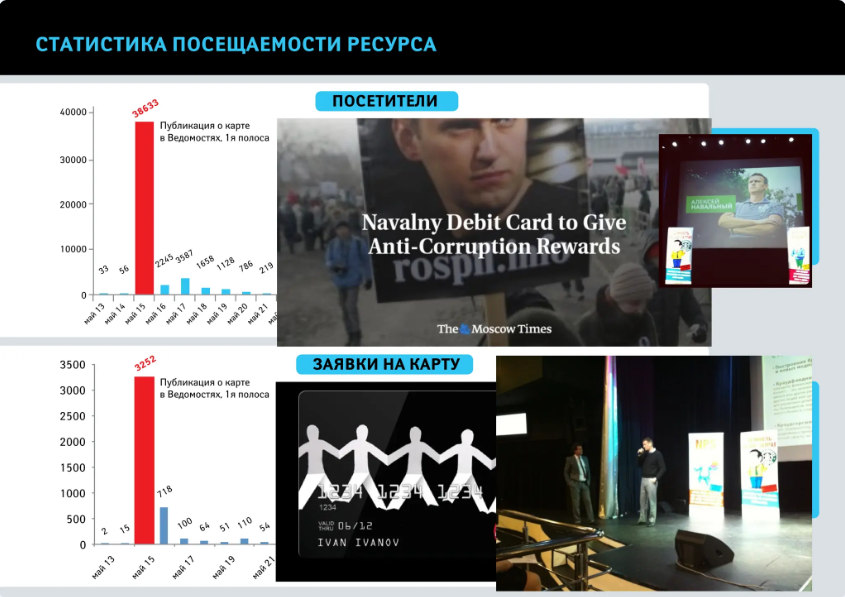
Presentation
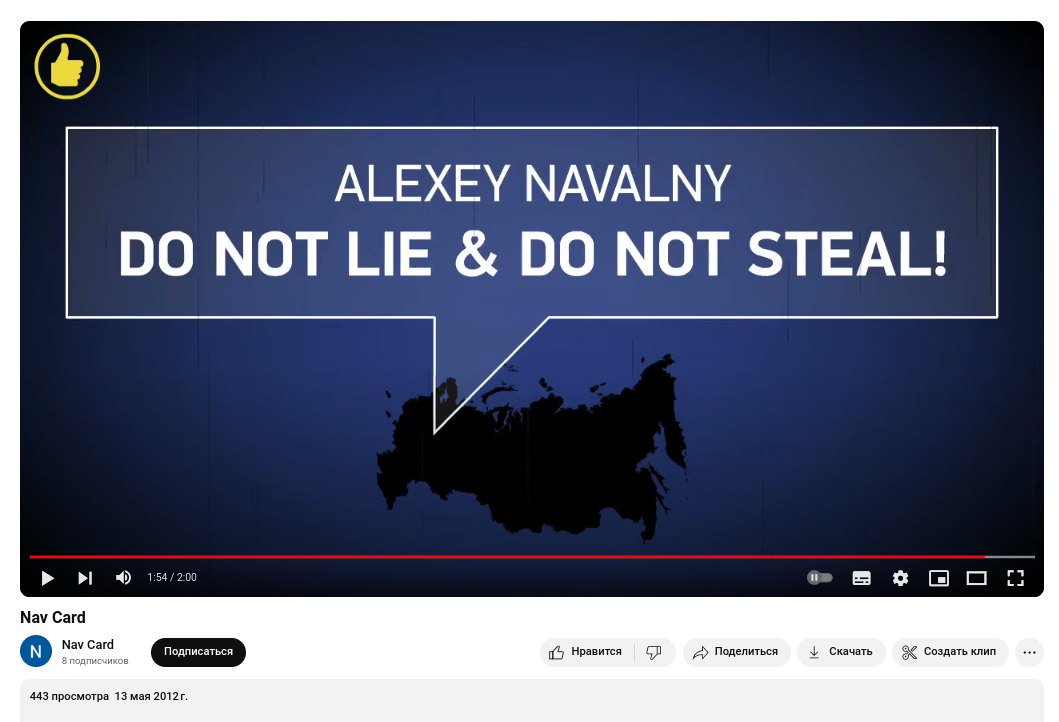
The claim of 5,000 applications is asserted solely by Solodkiy himself in the cited articles and in a presentation which shows that by the evening of the announcement and initial collection of applications it was still a creative marketing idea that needed to be sold to bank leadership (otherwise why present projections to management). The Russian promo video on YouTube was posted on May 16, 2012, per the web archive, but later deleted. The English-language promo was uploaded on May 13, 2012 and is still available.
And at 20:21, on the launch day, May 15, 2012, the following note appears in GQ:
Vladislav Solodkiy, VP for advertising and PR of the LIFE Financial Group, sent the GQ editorial office an official written denial of the group’s involvement in the “Navalny Card.” “We had and have nothing to do with this project,” Vladislav stated.
Also, the GQ article states:
According to information obtained by GQ Political Blog from reliable sources, the card will be issued by one of the banks in the LIFE Financial Group, which includes the head “Probiznesbank” and six subsidiaries. Anton Shubyenkin, head of Probusinessbank’s press service, refused to confirm this information, but noted that the seven banks within the group have “horizontal rather than vertical subordination.” The initiative, according to our sources, comes from the group itself, which saw the “Navalny Card” as a good way to attract a new audience and which itself reached out to the politician. (According to an eyewitness, Navalny spoke about this project at his lecture at the Russian Economic School, where he casually mentioned the idea of a card.) Also, according to our source, “some of the group’s co-owners hardly know about this project.”
From E. V. Panteleev’s survey
There was never any known active political stance by Leontyev S.L. Navalny A.A. was once invited to a corporate event “Strategic Session” as a public figure. The idea of a co-branded card with a portion of the bank’s commission going to the Anti-Corruption Foundation was not Leontyev’s idea and was rejected by me personally, as it was non-core for the bank and it is unacceptable to support political views of any orientation, since that contradicts the interests of clients and shareholders, who are only interested in profitability. In my view, politics should have nothing to do with a bank.
Sergei Leontiev FT
We’ve got the message that we’re being punished because of Navalny. That because I was supportive of the opposition. That was clear message. But that’s my problem. I just behave the way I think.
Stefania Palma
On the one hand, it is true that Sergei did approve the Navalny card projects. However, does this mean we should believe that it was the key reason why the Russian regime started going after him; that that is why he lost the bank license?
Courtney Weaver
If you think back to when Sergei was still in Russia, he didn’t actually attend those anti-government protests that Slava attended. He didn’t give any money to Navalny’s organisation when he was there. And when we spoke to a top official at Navalny’s organisation, that person hadn’t even heard of Sergei. At the same time, Sergei keeps telling us that he is convinced that this is the reason he was persecuted.
Sergei Leontiev
It’s just the narrative of all of the different theories and narratives, which is consistent with reality.
Courtney Weaver
Like a lot of things in Russia, it’s hard to know whether Sergei and the bank were targeted because of the Navalny card project. But in his asylum application, Sergei links his fate to Navalny’s, writing: “Navalny has been repeatedly arrested and convicted for the same unsubstantiated financial crimes that the Russian authorities have charged me with.”
Ivan, the head of a central bank who met with Petr, claims Navalny has nothing to do with the raids.
Ivan, via an actor
The central bank was not aware at all about Navalny and Navalny involvement. Even if we knew at this time, it would change really nothing. Nothing at all. The victims here clearly are the depositors, the owners. They just took money of the depositors and they live for 10 years with that money.
Courtney Weaver
But this is Russia and Vladimir Putin. Kyle Parker, the congressional staffer who looked at Sergei’s case, he says he’s seen all this before.
Kyle Parker
I have had to revise my view on just how thin-skinned and petty some of these Russian officials can be. Where I have thought, “Surely they’re not going to go after that individual. Surely that’s too small of a . . . ” And nope, not too small. And they’re going after him.
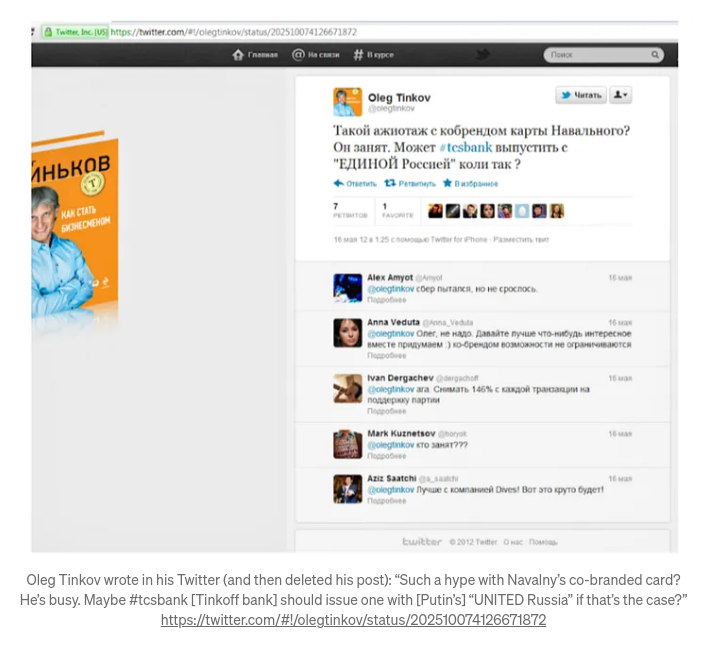
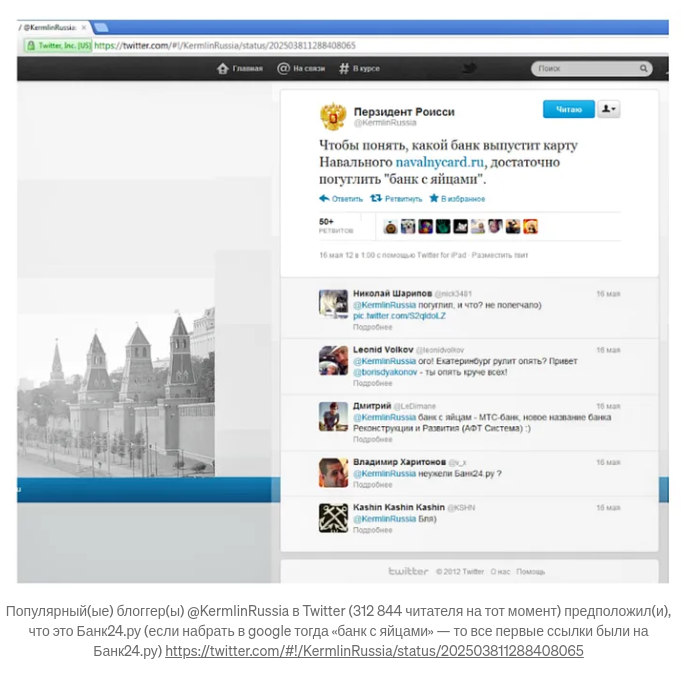
The Twitter buzz about the card was on May 16 in the accounts of Tinkov and KermlinRussia. Screenshots of those tweets are cited by Solodkiy himself in the Medium article. My speculation is that Ashurkov’s later written references to a “famous blog” relate to those tweets, because there are simply no other mentions anywhere.
Ashurkov’s affidavit:
Within days of the card announcement, a prominent opposition blog revealed LIFE’s involvement in the project via Bank24.ru. This was followed with a more detailed report in GQ Magazine identifying LIFE as the card issuing party.
On the day the GQ Magazine story broke, I was in contact with Slava at LIFE. He subsequently advised me that LIFE’s owners and managers had received calls from government agencies threatening them with bank sanctions if they continued to proceed with issuing the Navalny Card. Slava advised me that LIFE had no choice but to stop the project or risk its shareholders and customers’ assets to government seizure. LIFE publicly denied its involvement in the card issuing project that evening under mounting government pressure.
I emphasize, we are still talking about the same day.
This outcome was a setback to Mr. Navalny’s Anti-Corruption Foundation but was not surprising giving the Putin Administration’s history of stifling the political opposition, including the illegal seizure of banks and businesses assets. Despite this setback, an opportunity emerged where we could potentially issue the Navalny Card through the National Reserve Bank (NRB). A few weeks after LIFE withdrew, I called Slava at LIFE to ask if they would be willing to provide us with all of the card’s roll-out materials, including the applicant database. LIFE provided us all of the materials at no cost and I immediately began working with NRB on the issuance of the card.
It is important to note that the site content did not change until September 2012, and in June the outlet Slon published:
Nevertheless, other bankers interviewed by Slon claim there are no serious political risks, except perhaps increased scrutiny from inspectors, generally speaking for a bank (see the full survey). This is partly confirmed by Alfa-Bank’s consent to become the settlement bank for the Navalny Anti-Corruption Foundation. The previous donation method via Yandex.Money will remain, but now Navalny proposes channeling donations through this bank.
But on the day of the official project announcement, May 15, Alexander Zheleznyak, chairman of the board of Probusinessbank, denied the existence of a joint project.
“I only know that there is such a person as Navalny, and nothing more. Perhaps at the executor level he talked to someone about issuing cards, but as the first person I know nothing about it. I would have known had it reached that stage of discussion and there was a project,” he told Slon. Despite the lack of reliable confirmation, information about the partnership leaked to the media and was published by GQ. After that, the bank issued an official denial, stating that this information was not only untrue but also caused reputational harm to the financial group. Thus, the group’s shareholders did not want to link its banks to political projects. The Probusinessbank website states it develops independently of political parties and movements.
Alexander Lebedev, chairman of the board of the National Reserve Corporation:
— We expressed interest in issuing co-branded cards via the National Reserve Bank, but I don’t have a formal proposal yet. We discussed the situation in principle: I was preliminarily asked how I would feel about it, and I asked to see how well it was worked out. If these cards help popularize the fight against corruption, it would be good for civil society. As I understand it, the project was originally done with another bank, and then something stalled. I see no political risks, since supporting Navalny’s foundation is support for Putin’s and Medvedev’s efforts to fight corruption.
Bella Zlatkis, deputy chair of Sberbank:
— I am looking at the financial risks so far. It’s all unclear — unclear what the technology is; unclear what the proposal is. There could be questions about this activity, including risks and even the legality of transactions on these cards. For now it’s unclear to me. But this was only a statement so far. We haven’t heard the technology. As for political risks, if the political movement to which deductions are made is legitimate, then there should be no risks.
Oleg Vyugin, chairman of MDM Bank:
— I think that a bank that undertakes to issue cards with Alexei Navalny will not face political risks. Checks are possible on that basis, but the scale of the problem for the authorities is not that large. Well, a card is a card — what of it?
Ashurkov’s affidavit:
Similar to the LIFE situation, NRB came under threats and attacks from the banking authorities once it became public that they plan to issue the Navalny Card. Ultimately, NRB succumbed to the threats and also withdrew from the project.
I repeat the October 7, 2012 quote from the piece cited by Solodkiy:
Nevertheless, the National Reserve Bank is still seeking to issue the “Navalny card,” Lebedev’s spokesman Artem Artemov said Friday.
Ashurkov’s affidavit:
LIFE under the leadership of Sergey Leontiev, Alexander Zheleznyak and Slava Solodky took a political risk in helping Navalny’s Anti-Corruption Foundation. Based on my personal experience as well as my work with Alexei Navalny, I can state that anyone or any company that is viewed by the Russian authorities as supporting the opposition cause is almost guaranteed to suffer, if not facing the risk of elimination through various means available to the Russian Government. These actions include illegal seizures of assets and false charges of embezzlement similar to those LIFE and its owners faced after it became public that they were partnering with us on the Navalny Card. This is unfortunate for Russian democracy but is the reality under the regime of Vladimir Putin. It is very possible that the arrests, false charges and the seizure of the banking group which happened in respect of LIFE, its executives, and its members was a result of their attempt to help Alexei Navalny and Anti-Corruption Foundation in its absolutely legal civil work.
I will conclude by quoting Ashurkov’s own Facebook post:
The scenario that the group’s bankruptcy and the persecution of its shareholders and management were a direct consequence of the failed “Navalny card” project is possible, but seems to me rather unlikely. <…> It seems likely to me that the LIFE group’s banks ended up on the list of banks subject to such a procedure. And because their shareholders were considered “politically unreliable” (because of the attempt to issue “Navalny cards” and, in general, their opposition views) their folder in the stack of folders of banks slated for such state raiding moved to one of the top places.
For the record, Ashurkov writes:
Since none of the leadership team lived in the US, we needed to bring in an experienced person to help us with the administrative and financial matters of registering and operating the American legal entity.
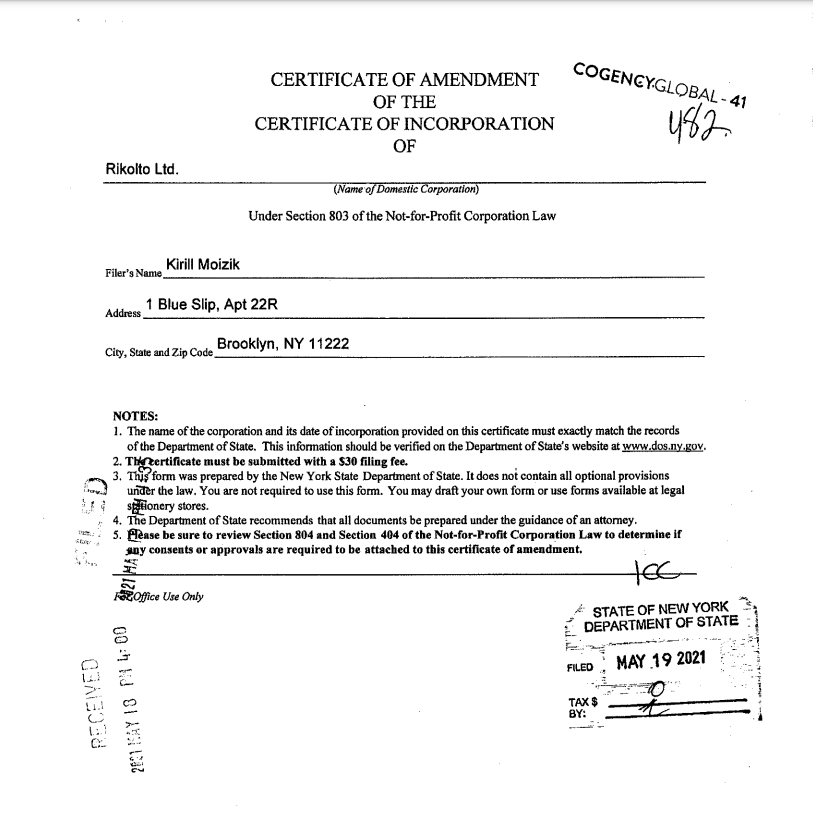
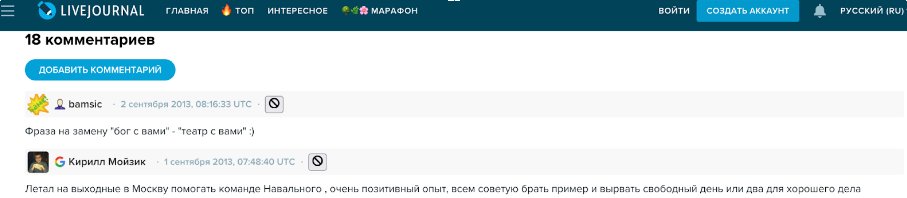
Kirill Moizik, apparently a US citizen, on the very day when all the other paperwork transferring control to Zheleznyak was executed, was the owner of ACF Int for several hours. That was September 8, 2021. According to RT and Remeslo, donations were collected to his PayPal. You can omit this part due to the RT source; it doesn’t change the essence much, since the hacked Navalny correspondence shows clearly that FBK has a specialist for setting up companies outside Russia.
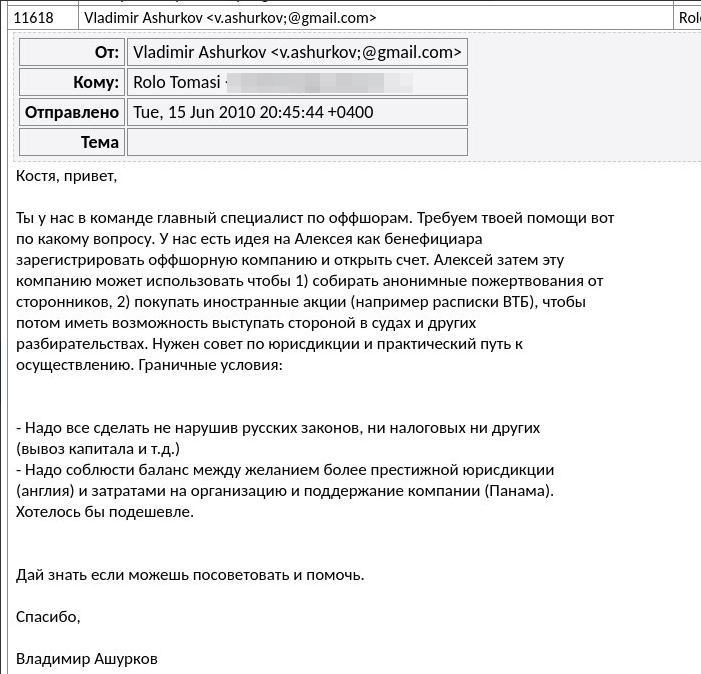
In YouTube videos, FBK staff claim Zheleznyak had been holding rallies for many years, but his activism began only a few months after Navalny’s poisoning.
Don’t lie and don’t steal foundation — ptooey!
And for the most patient, a few details you can interpret as you wish:
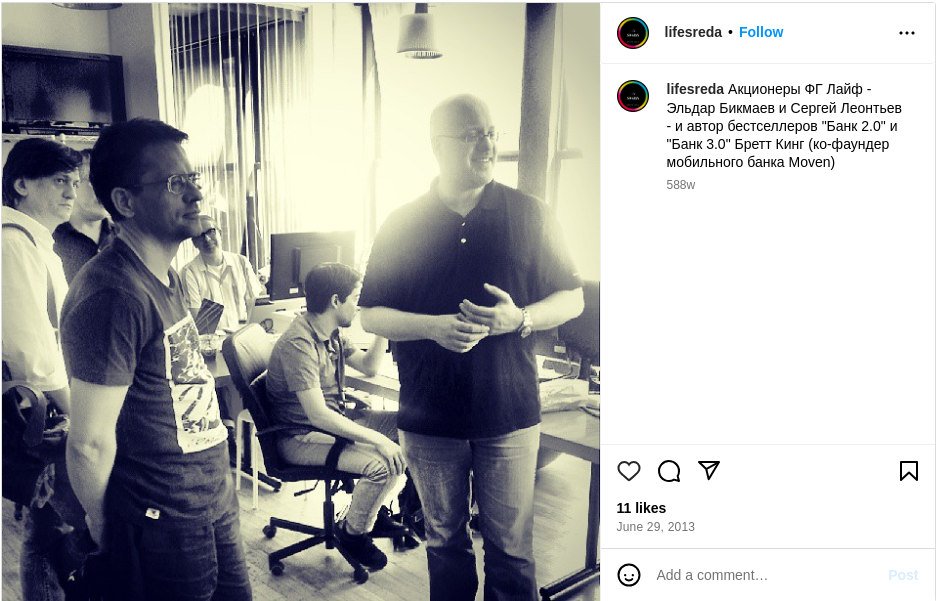
- Leontyev was cited as a shareholder in Life.Sreda’s Instagram in 2013.
- Leontyev has a US legal entity registered with that name.
- Solodkiy launched several investment bubbles that quietly vanished, including crypto.
- Public sources suggest around $150M flowed from Probusinessbank to Life.Sreda before license revocation. Yet no one from that VC company was brought to subsidiary liability.
- Life.Sreda appears in the Panama Papers (they are Trident Trust clients).
- Slava’s personal Twitter account was renamed to nansen.id.
- And a joint photo with Shuvalov in 2016:
There was Solodkiy, who worked on factoring. He is constantly looking for some crap to invest in. Every other project of his is a bubble with varying “success.” And he invited Navalny to the strategy session on April 5. On April 24 at 22:50 Navalny posted on Twitter something like “we’ll do the card,” and then quickly deleted it. There are three public photos from that April 5 meeting. It’s a regular strategy session on potential new projects they were always cooking up.
By the way, here’s Solodkiy in November 2016 with Shuvalov in Singapore. A true oppositionist.
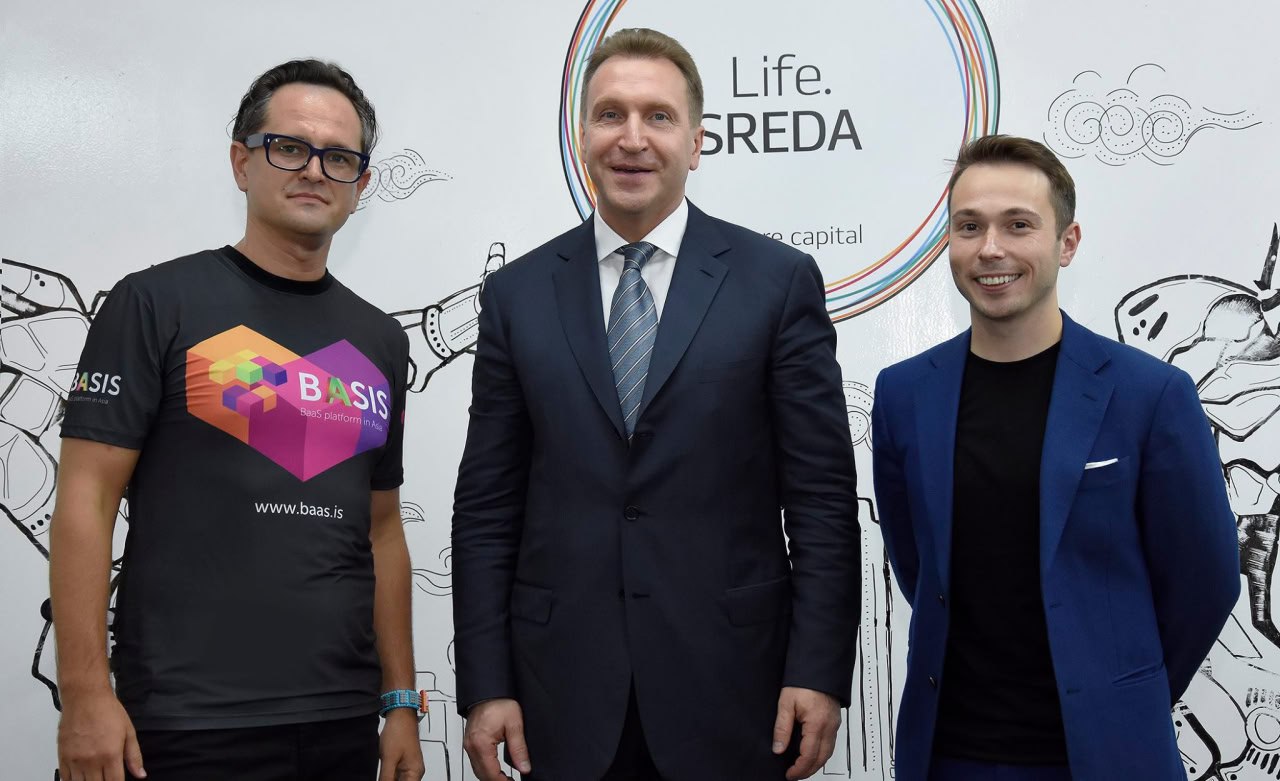
Life.Sreda, by the way, is Leontyev’s US legal entity.
I previously wrote about Ashurkov’s lie